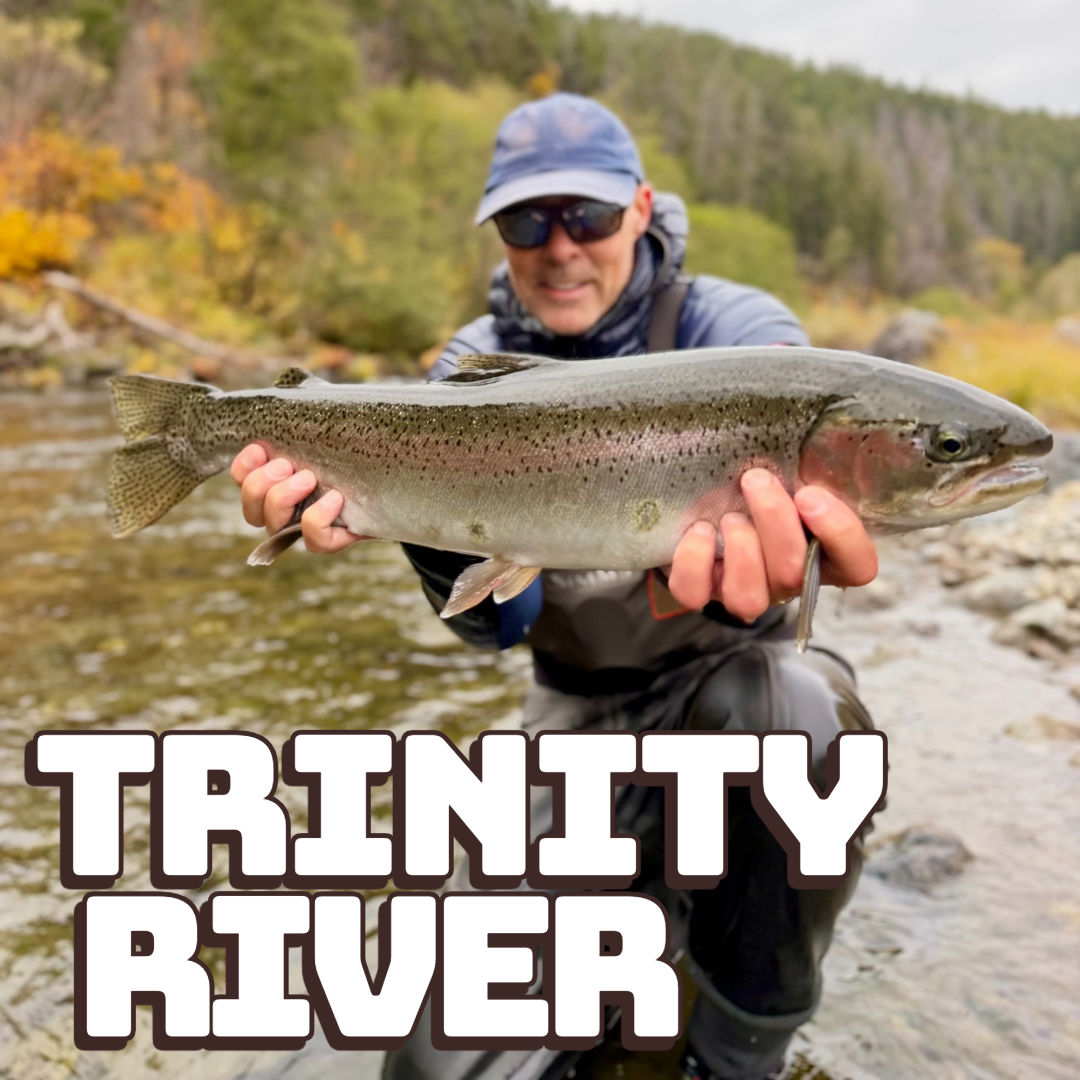
The coming months are some of our favorite times to fish the Trinity River. Between the beautiful winter scenery and the opportunity to connect with a fresh steelhead, November through January offers some of the most rewarding days of the season.
Upper Trinity – Lewiston to Douglas City
As we move further into winter, fish will begin settling into the upper river. This section offers some great opportunities for anglers who enjoy technical nymph fishing. Light indicator setups, smaller flies, and a little patience can make for some really rewarding days on the water.
Middle Trinity – Junction City, Evans Bar to Pigeon Point
This is a section a few of us really enjoy fishing as we move into the winter months. We’re always looking for those fresh steelhead that are still making their way upriver. There’s something special about fishing this stretch, knowing that the next run could hold a fresh winter fish.
Lower Trinity – Below the North Fork
We’ll continue fishing the lower river through November, targeting late-arriving fall steelhead and the first of the winter fish. This is strictly swing water for us. We don’t offer indicator trips on this section, but for anglers who enjoy swinging flies, it’s a great opportunity to connect with a fresh Trinity River steelhead.
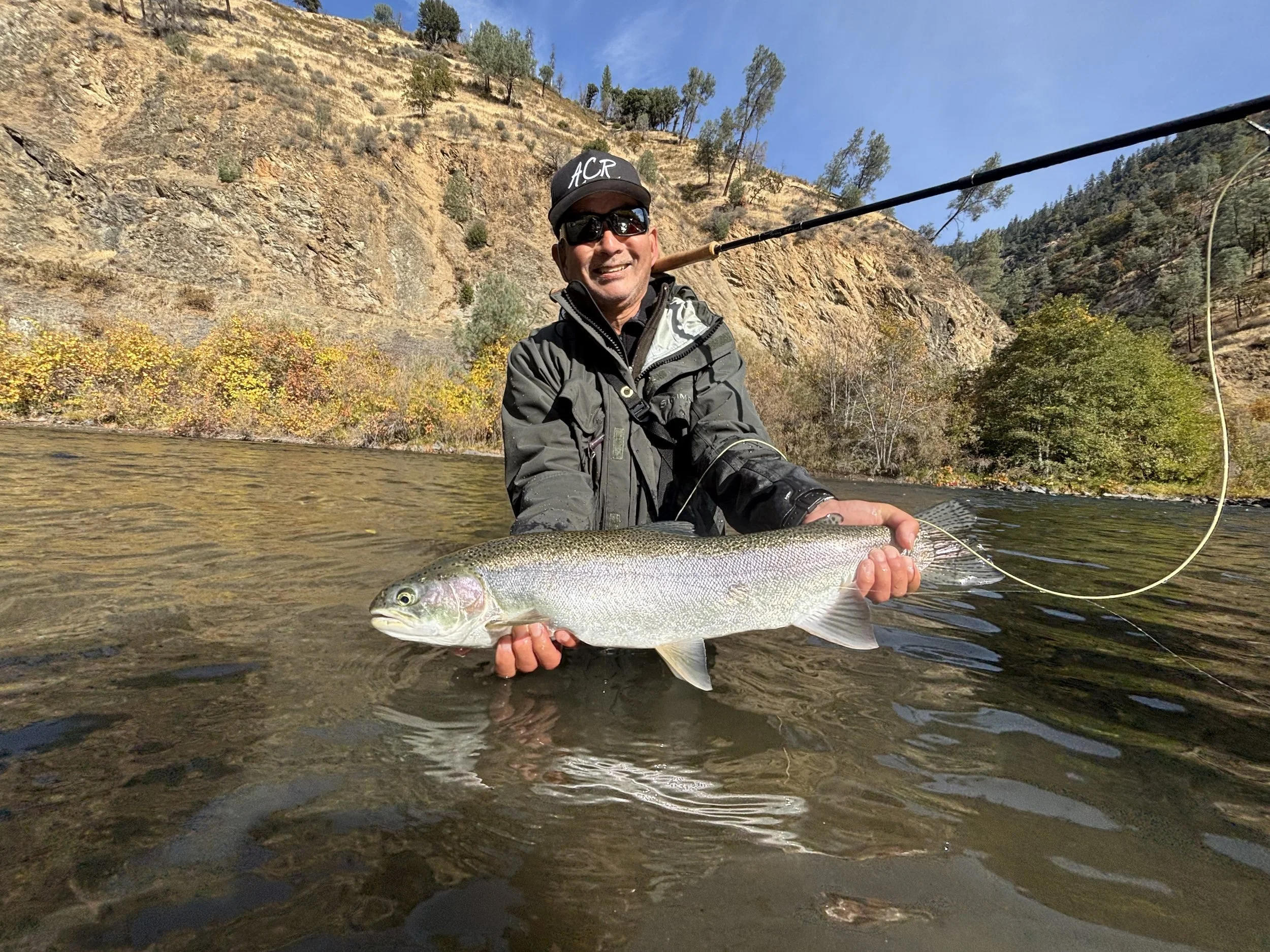
Wanna Fish the Swing…
For those interested in swinging flies, we have three dedicated swing guides who know how to make your time on the water, and every one of those thousand casts, count. We offer swing trips throughout the Trinity River system and are always in pursuit of the best water.
Whether you’re an experienced Spey caster or just getting started, we can help dial in your casting and make sure you’re fishing the right equipment for the conditions. From rod selection and head weights to head lengths, leaders, and flies, we’ll help you put together a well-balanced outfit that gets your fly down and swinging through the right water.
Trinity River Steelhead – What’s an Adult and What’s a Half-Pounder?
One question that comes up quite a bit is what we consider an adult steelhead versus a half-pounder on the Trinity River.
Celebrating the Trinity River Half-Pounder
One of the things that makes the Trinity River so special is its half-pounder steelhead. These fish have a unique life cycle that you don't find in many steelhead fisheries.
Unlike most steelhead that spend a year or more in the ocean before returning to spawn, half-pounders return to freshwater after just a few months at sea. Most aren't returning to spawn. They're coming back to feed and grow before eventually heading back to the ocean and returning as larger adult steelhead.
What makes these fish so much fun is their willingness to eat a fly. They're aggressive feeders, hard fighters, and a blast to catch on a swung fly or a nymph. They're also a big part of what makes the Trinity and Klamath River systems so unique.
Their size can vary depending on which tributary they're headed to and how much time they've spent in the estuary or saltwater, but they generally range from 10 to 21 inches, with some of the larger ones earning the nickname "super half-pounder."
We think these little steelhead deserve just as much appreciation as their bigger relatives. They have an incredible life story, and we're fortunate to have them in our backyard. Whether you're new to steelhead fishing or have been chasing them for years, don't overlook the half-pounder. They're worth celebrating!
Cheers to the Adults!
After spending time talking with and fishing alongside some of the longtime legends of the Trinity River steelhead fishing community, we consider an adult steelhead to be 23 inches or larger.
These fish have spent one or more years in the ocean, growing and maturing before making their way back to the Trinity River to spawn.
These are the general size distinctions we've used on the Trinity for years, not strict biological definitions.